

From Uncertainty to Preparedness: Why VAT in Qatar May Be Closer Than Expected ?
In times like these, it is important to begin with gratitude. We extend our sincere appreciation to all those working tirelessly to ensure the safety and stability of our communities; frontline responders, armed forces, healthcare professionals and essential service workers who continue to operate under immense pressure so that others may live with peace of mind. We also express our gratitude to the great leadership of our country for their continued efforts in safeguarding the nation. Our thoughts and prayers remain with the region, with hope for a swift return to stability and security.
Periods of geopolitical tension have historically prompted governments across the region to reassess economic priorities. Today, with critical oil and gas infrastructure impacted and export capabilities potentially constrained, particularly with disruptions to key maritime routes such as the Strait of Hormuz, the urgency to diversify revenue streams becomes more pronounced than ever.
Taxation remains one of the most effective and immediate tools available to governments seeking to strengthen fiscal resilience. This is not unprecedented in our region.
Amid mounting pressure to diversify government revenues away from declining oil and gas income around 2017, GCC countries moved forward with the GCC VAT Agreement, resulting in the introduction of VAT regimes in Saudi Arabia, United Arab Emirates, and Bahrain shortly thereafter.
More recently, the COVID-19 pandemic placed additional strain on public finances, prompting Saudi Arabia and Bahrain to increase VAT rates to address resulting budgetary pressures, while Oman progressed with introducing its VAT regime altogether.
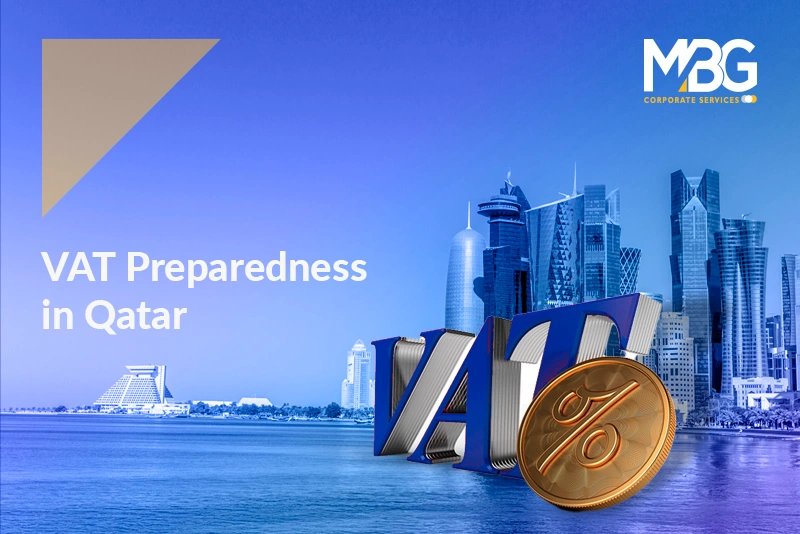
Against this backdrop, the anticipated introduction of VAT in Qatar may no longer be a distant possibility, it may be accelerated. Businesses that have been deferring preparation under the assumption of a longer timeline may find themselves with limited time to react once formal announcements are made.
This presents a critical window of opportunity. Companies operating in Qatar can act now to gain a competitive advantage by preparing for VAT implementation ahead of time. This includes conducting impact assessments, reviewing contractual arrangements, optimizing tax structures, upgrading systems and processes, and equipping teams with the necessary training and awareness. Early movers are not only better positioned for compliance but are also able to leverage VAT as a strategic tool rather than viewing it solely as a regulatory burden.
At MBG Corporate Services, we are already supporting organizations across sectors in navigating the complexities of VAT readiness. From initial assessments to full-scale implementation support, our approach is designed to help businesses transition smoothly and confidently. With the right preparation, VAT does not have to be an uncertainty, it can become a strategic advantage.
If you would like to understand how VAT may impact your business and how best to prepare, we invite you to get in touch with us to explore how we can support you at every stage of your VAT journey.
As we conclude, we once again extend our deepest appreciation to those safeguarding our region during these challenging times. We remain hopeful for peace, stability and a return to normalcy for all.