

Logistics & Trade Hub Ambitions: Can Qatar Compete Regionally?
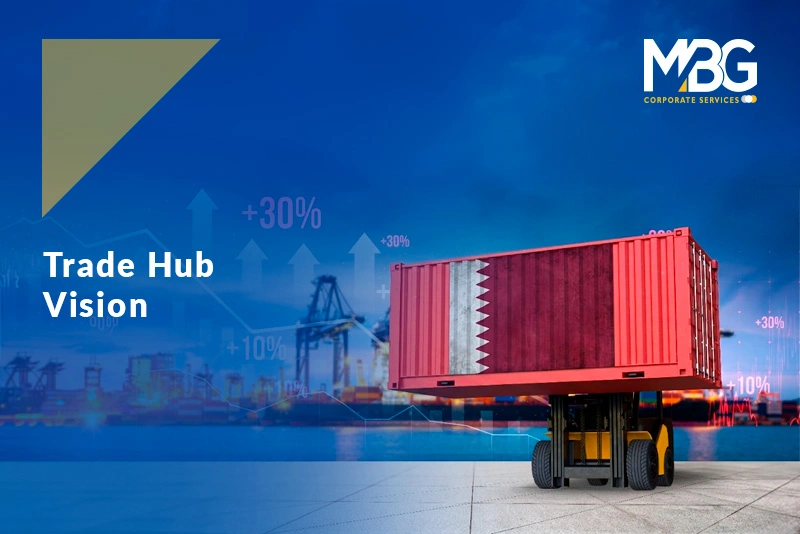
Qatar’s future might look nothing like its past. For a long time, the country’s place on the world map came down to one thing: gas. Enormous quantities of it the third largest reserves on the planet. But if you look at what’s actually being built around Hamad Port, the cargo terminals at Hamad International Airport, and the free zones spreading out around Doha, a different story is taking shape. Qatar wants to become a serious logistics and trade hub. Whether that’s a realistic goal or an expensive ambition in a neighborhood that’s been doing this for decades is the real question.
The Infrastructure Is Hard To Dismiss
On the ground, the numbers are genuinely impressive. Hamad Port can handle around 7.5 million Twenty-foot Equivalent Units (TEUs) a year, putting it in the top tier of Gulf container ports. The airport moves over 3 million tonnes of freight annually and consistently ranks among the best-connected cargo hubs in the world. And Qatar’s location roughly equidistant from Europe, Asia, and Africa is the kind of geographic luck you simply can’t manufacture.
The free zones are starting to feel real too. Ras Bufontas and Um Alhoul offer the full package: full foreign ownership, no corporate tax, and customs processes designed to actually move quickly. Pharma companies, food processors, and light manufacturers have set up genuine operations there, not just brass plates.
The Competition, Though, Is No Joke
Here’s where honesty matters. Dubai’s Jebel Ali has owned the Gulf logistics space for over forty years. It handles more than 14 million TEUs a year, anchors one of the most connected free zone networks anywhere, and sits alongside two major airports. Saudi Arabia is throwing serious money at its own logistics buildout ports, industrial parks, the works with the financial firepower of the world’s largest oil producer behind it. Oman is quietly carving out industrial and maritime niches at Duqm and Sohar. Bahrain is positioning itself around financial and business services. Everyone in the GCC is chasing the same diversification dream, and logistics is near the top of every wish list.
So Where Does Qatar Actually Fit?
The wrong way to look at this is as a winner-takes-all race. Qatar doesn’t need to beat Jebel Ali. It needs to find the lanes where it has a real edge.
Three stand out. The first is cold chain and food logistics. The 2017 blockade was a crisis, but it forced Qatar to build resilient domestic supply chains faster than anyone thought possible. That experience left behind real capability and real credibility in temperature-controlled and food-grade logistics, both for domestic needs and regional re-export.
The second is energy sector logistics. Being the world’s leading LNG exporter means a constant flow of specialist equipment, spare parts, and technical services. That’s a high-value, relationship-driven logistics vertical, and being physically close to the energy companies and contractors driving that demand is a natural advantage.
The third is air connectivity to markets others aren’t serving well. Qatar Airways Cargo reaches deep into Africa and South Asia in ways that port-focused rivals simply can’t match. For time-sensitive, high-value freight, that network is a genuine differentiator and one that doesn’t require Qatar to fight on Jebel Ali’s turf.
The Honest Verdict
Qatar doesn’t need to be the Gulf’s biggest logistics hub. It needs to be the right hub for the right cargo essential enough that companies planning regional distribution put it on their shortlist rather than skipping past it.
The infrastructure is real. The location works. The blockade, for all the damage it caused, proved Qatar could execute under pressure. The open question is whether the commercial ecosystem around that infrastructure the freight forwarders, the customs brokers, the 3PL operators, the tech providers will grow fast enough to match what’s been built.
Ports and airports get you in the game. What actually wins it is the density of services, the depth of expertise, and the volume of cargo that turns good infrastructure into a living, breathing trade hub. Qatar has the foundations. Now it comes down to execution and in logistics, that’s the only thing that really counts.