




UAE Legal Entity Types and Business Structures: A Comparison Guide
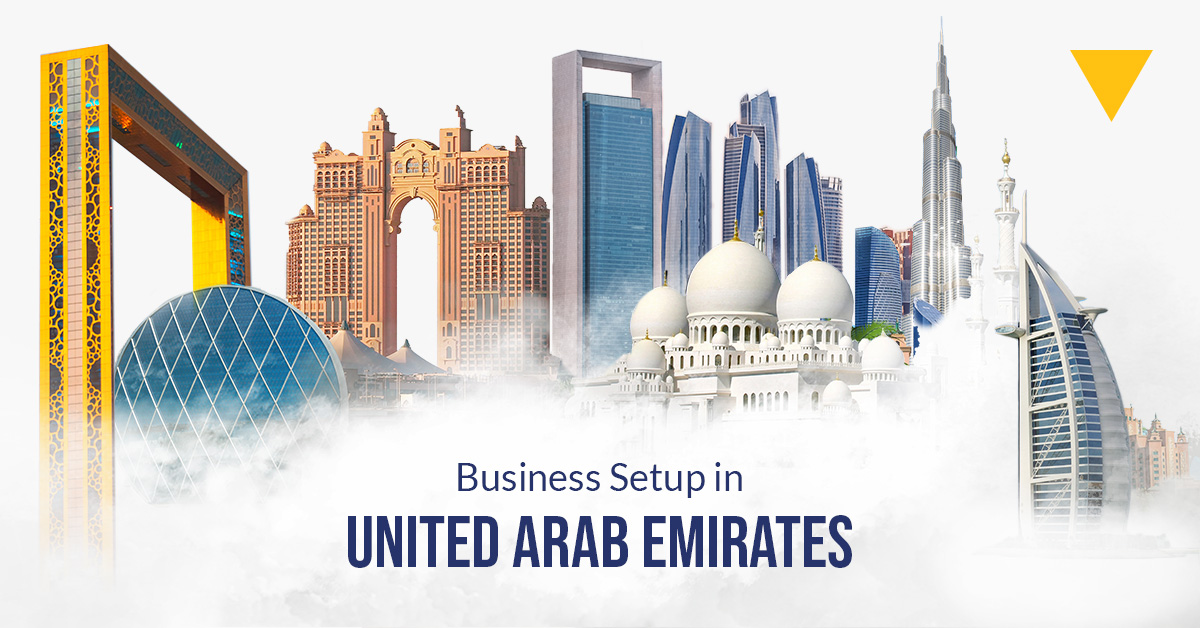
Once you’ve decided to set up in the UAE, the next decision, legal entity type and jurisdiction, determines your tax treatment, market access, and compliance obligations for the life of the business. This guide compares the available legal forms and the three jurisdictional routes (mainland, free zone, offshore), with the corporate tax consequences of each, so the choice is made deliberately rather than defaulted into.
1. Why the UAE Remains an Accessible Jurisdiction to Structure In
The UAE continues to offer no personal income tax, full repatriation of capital and profits, and across most sectors 100% foreign ownership without a mandatory local partner. The 10-year Golden Visa remains available to qualifying investors, property owners, and highly skilled individuals, and shorter-term virtual working visa categories exist for remote workers and entrepreneurs who want UAE residency without a full local operating entity. None of this has changed. What has changed is that “no tax” no longer describes the corporate side of the picture; see Section 4 below before choosing a structure on tax grounds alone.
2. Two Ways to Establish a Presence: Physical and Virtual
Investors have two broad routes into the UAE market. A physical presence means incorporating one of the entity types below inside a UAE jurisdiction. A virtual presence appointing a commercial agent, distributor, or franchisee lets a foreign company reach UAE customers without establishing a local entity at all, at the cost of direct control over the relationship. Most businesses with a genuine UAE growth plan choose a physical presence; a virtual presence suits market testing before committing to incorporation.
3. Legal Forms of Entities Available in the UAE
Once you’ve chosen a physical presence, the available legal forms include the following:
- Sole Proprietorship: Single-owner, suited to professional and small-scale activities
- General Partnership: Two or more partners with joint liability
- Limited Liability Company (LLC): The most common structure for foreign investors, offering liability protection with operational flexibility
- Foreign Company Branch or Representative Office (outside free zone): An extension of a foreign parent rather than a separately incorporated entity; see our detailed comparison of a branch office versus a representative office
- Public and Private Shareholding Companies: Suited to larger capital-raising structures
- Civil Companies: Used for certain professional service activities
The right choice depends on liability tolerance, capital-raising plans, and whether the business needs a fully independent legal personality or can operate as an extension of a foreign parent.
4. Jurisdiction: Mainland, Free Zone, or Offshore and the Tax Consequence of Each
This is the decision with the most direct financial impact, and it can’t be made without the current corporate tax framework in view. Since June 2023, the UAE has applied a federal corporate tax of 9% on taxable profit above AED 375,000, under Federal Decree-Law No. 47 of 2022.
- Mainland registered with the Department of Economic Development (DED) can trade freely with the domestic market and internationally and is subject to the standard 9% corporate tax above the threshold on all income.
- Free Zone operates under its own regulatory framework, can trade within and outside the UAE, and can achieve a 0% tax rate on qualifying income if it holds Qualifying Free Zone Person (QFZP) status. Income that doesn’t meet the qualifying-income conditions, most notably income from UAE mainland clients, is taxed at the standard 9% regardless of the entity’s free zone location. QFZP status must be actively maintained every tax period; losing it typically means 9% applies to all income for that period and the following four.
- Offshore registered in one jurisdiction but operated outside it, typically used for holding, investment, or international trading structures rather than active UAE market trading.
The practical takeaway: a free zone structure only delivers a genuine tax advantage if your revenue mix can realistically stay within QFZP’s qualifying-income rules. A business expecting significant UAE mainland client revenue often finds a mainland structure more straightforward to operate, even though it forgoes the 0% band on qualifying income that a compliant free zone entity can access. For the full mechanics of each jurisdiction, see our dedicated guides to mainland company formation, free zone company setup, and offshore company formation.
5. Free Zones Across the Emirates
The UAE operates more than 40 free zones across the emirates, each typically focused on specific industry clusters:
- Dubai hosts the largest concentration, including the International Free Zone Authority (IFZA), Dubai Multi Commodities Centre (DMCC), Dubai Airport Free Zone, Jebel Ali Free Zone, and Dubai Biotechnology & Research Park (DuBiotech).
- Abu Dhabi’s free zones include Masdar City Free Zone, Abu Dhabi Airport Free Zone, Khalifa Industrial Zone, Abu Dhabi Global Market, and twofour54.
- Sharjah’s free zones include Sharjah Airport International Free Zone, Sharjah Media City Free Zone (Shams), and Hamriyah Free Zone.
- The Northern Emirates host the Ras Al Khaimah Economic Zone (RAKEZ), Ras Al Khaimah Media Free Zone, Ajman Media City Free Zone, and Fujairah Free Zone, among others.
Choosing a free zone is as much about industry fit and physical location as it is about the tax treatment discussed above a zone aligned with your sector typically offers licensing categories and infrastructure built for that activity specifically. See our guide to Dubai Media City for entertainment and media businesses as one example of sector-aligned free zone selection.
6. Common Advantages of Free Zone Structures (Beyond Tax)
- 100% foreign ownership of the enterprise
- Streamlined work visa processing through one-stop-shop services
- Access to zone-specific logistics and industry infrastructure
- Full exemption from import and export duties on qualifying goods
- 100% repatriation of capital and profits
- Proximity to businesses in the same sector, which can support supply chain and partnership opportunities
7. License Types
The activity you intend to conduct determines the license category required, which in turn affects both the jurisdiction and entity type available to you:
- Industrial Licence
- Commercial Licence
- Service Licence
- Logistics Licence
- Media Licence
- Education Licence
For the registration process itself once your license category is identified, see our guide to trade licensing in Dubai.
8. Mainland vs. Free Zone: The Factors That Actually Differentiate Them
Beyond the tax treatment already covered, the practical differentiators most investors weigh are:
- Scope of business mainland allows direct trading with the domestic market without restriction; free zone entities generally cannot trade directly with mainland clients without risking their tax and licensing position
- Visa eligibility: Both routes support employee visas, but quotas and processes differ by jurisdiction and office size
- Audit and accounting requirements increasingly convergent since the introduction of corporate tax, since both mainland and QFZP free zone entities now carry active compliance and, in many cases, audited-financials obligations
- Capital requirements vary by entity type and activity rather than by jurisdiction alone in most cases today
- Approvals required mainland entities often need additional sector-specific approvals (e.g., for regulated activities); free zone entities’ approvals are typically handled within the zone’s own authority
9. How MBG Helps
MBG advises on entity type and jurisdiction selection as a single decision, not two separate ones, including the tax modeling needed to assess whether a free zone structure can realistically sustain QFZP status given your expected revenue mix. Our support covers business valuation, company incorporation, investment advisory, feasibility studies, entity and licensing structuring, and ongoing accounting, assurance, and corporate tax compliance once you’re operational. For the broader picture of why the UAE remains attractive and where to start, see our UAE business setup overview.
You can reach out directly for questions related to setting up a business in the UAE/Dubai:
WhatsApp: +91 88601-90008
Email: communications@mbgcorp.com